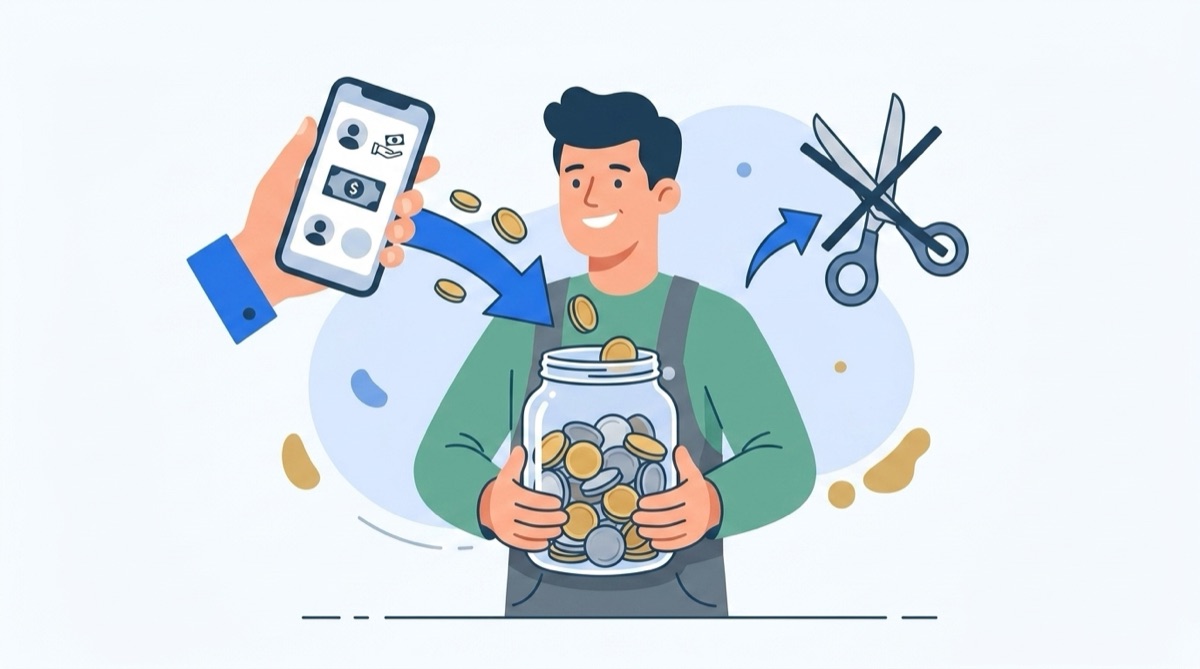
How to Get Paid Without Card Fees: 6 Ways That Work
Card processors take 2-3.5% of every payment — $300+ a year for a typical sole trader. Six zero-fee ways to get paid, with a free template for each.
Quick answer: The main ways to avoid card-processing fees are bank transfer and local account-to-account payment rails. Put the exact payment details and reference on a proper invoice; keep card checkout as an optional convenience when speed matters more than the fee.
When you are ready to create the document, use the free invoice generator; for saved clients and repeat workflows, explore the InvoiceSonic invoicing app.
Every card payment costs you a slice: Square takes about 2.9%, Stripe similar, PayPal invoicing up to 3.49% plus a fixed fee. Invoice $2,000 a month through them and you're handing over $700+ a year for the privilege of being paid. Here are six ways to get the money without the cut — each with a free invoice template that puts the payment details in front of your client properly.
1. Bank transfer
The default for business payments, and free in nearly every country. The catch is friction — account numbers get mistyped, payments get "forgotten". Fix both by putting your details on a professional invoice: the free invoice generator lays out BSB/account, sort code, routing number or IBAN correctly for your country.
2. PayID (Australia)
Instant Osko transfer to your phone number, email or ABN — money lands in minutes, zero fees, and nothing to mistype. If you invoice Australians, this should be your first ask. Free PayID invoice template.
3. Zelle (US)
Bank-to-bank, instant, free — the closest US equivalent to PayID. No invoicing layer at all, which is why you pair it with a Zelle invoice template and a receipt once it lands.
4. Venmo & Cash App (personal payments)
Free between personal accounts, and where a lot of American side-hustle money already moves. Business profiles take a small cut (Venmo 1.9% + $0.10 — still under half a card fee). Templates: Venmo, Cash App — and the full app-by-app comparison.
5. BPAY (Australia)
Trusted by older and corporate Australian payers — they've paid bills with it for decades. Needs your biller code presented properly: free BPAY invoice template.
6. Deposits upfront
Not a payment rail — a cash-flow strategy. Billing 50% before you start halves what you can lose to a slow payer, whatever method they use. Free deposit invoice template shows the amount paid and balance remaining cleanly.
The math
A sole trader invoicing $50,000 a year through a 2.9% card processor pays about $1,450 in fees. The same year on bank transfer, PayID or Zelle: $0. The only real argument for cards is convenience — and a professional invoice with one-tap payment details removes most of it.
The trade-off to manage is follow-up: card checkouts are instant, transfers can drift. Two fixes: reminder emails that work, or InvoiceSonic Pro, which chases overdue invoices automatically at 7, 14 and 30 days and gives every invoice a hosted payment page — your details, zero fees, and we never touch the money.
Make lower-cost methods easy to use
A cheaper payment rail only helps when the customer can complete it without another email. Put the account or payment destination, currency and invoice-number reference directly on the invoice. Explain which method you prefer while retaining an alternative for customers who cannot use it.
Bank transfer is often lower cost for larger invoices, but manual matching becomes expensive when references are missing. Ask the customer to use the invoice number and reconcile incoming transfers promptly. For other rails, check business-use rules, limits and dispute handling rather than relying on consumer-account assumptions.
Compare total cost, not just fees
Include settlement delays, failed-payment handling, reconciliation time and customer conversion. A zero-fee method that adds several days of chasing may cost more than a modest card fee. Model the alternatives with the payment fee calculator, then measure how often each method is actually used.
Do not add an unexpected surcharge after the customer agrees to the price. Any fee or discount policy should be transparent and compliant with the rules that apply to the business and payment method.
Set a payment-method policy
Write down which methods the business accepts, which it prefers for different invoice sizes and how each one is reconciled. Train anyone issuing invoices to use the same instructions and reference format. Consistency reduces unidentified transfers and customer questions.
Review the policy when the business enters a new country, changes banks or begins taking recurring payments. A method that works for one-off domestic invoices may not suit subscriptions, international clients or deposits.
After introducing a lower-cost option, measure adoption and days to pay. Savings are real only when customers use the method and payments can be matched without additional administrative work.
Protect customer choice
A preferred lower-cost method should not make payment inaccessible. Keep at least one practical alternative for customers whose bank, country or purchasing policy cannot use it. Explain any difference in timing or fees before the customer commits.
Review failed and abandoned payments as well as successful ones. If customers repeatedly request a card option, the conversion benefit may justify the fee. The best mix balances cost, speed, customer confidence and the time required to reconcile each transaction.
Keep fraud prevention in the workflow
Verify changes to bank or payment details through a trusted channel and warn customers that unexpected instructions should be confirmed. Limit who can edit saved payment information, and review issued invoices after any change.
Lower fees are not valuable if weak controls create misdirected payments. A stable invoice record, recognisable business identity and clear reference protect both the customer and the business while preserving the benefit of the lower-cost rail.
Make the no-card option visible on quotes as well as invoices when payment method affects the commercial decision. Customers are more likely to use a preferred rail when they understand it before the due date, not after a reminder arrives.
Create your invoice in 60 seconds
Your first PDF is free. Fill in the invoice, download it, and send it to your client.
Create my invoice free →